ANDREA LI

LIMITED COLLECTIONS

Tamar Collection

For Tamar

Tamar CollectionAndrea Li
Photo of a smiling woman in sunglasses with a large white dog in a grassy field, mountains behind, and “For Tamar” text overlay.

Any artist who has successfully found their identity and an aesthetic that naturally grows from it will tell you it's not an easy path. It's a hard-fought journey that constantly causes you to second-guess yourself. It often begins as an inward exploration to find meaning, purpose, and what you want your work to say. I had been navigating this space for years before I met Tamar and felt I had finally discovered a fragile seed to which I could anchor my aesthetic, something that was uniquely mine, a signature look that is unmistakably me. Except it was still raw and wild, and I often wondered whether, in the process of chasing something so distinct from mass-market jewelry, I would land in a space far removed from accessibility and connection. Then something happened that gave my doubtful soul the soothing balm of reassurance it so desperately needed. It was a moment that changed my life forever, and it came to me in the form of a beautiful soul full of vitality, unlike anything I had experienced previously, Tamar.

Some people see your work. A rare few see all the way through it, to the thing you were reaching for and could never quite name yourself. She was one of those few.

We met the way she tells it below: across a crowded ballroom, though I have always remembered it as her finding me. She became a collector, and then something more than a collector. She understood these pieces more completely than anyone, and she gave me language for what I do. When she told me that the back of my work, the woven wire matrix I had been told for years to hide, was the very thing she loved most, she called it the weave. I have called it that ever since.

Tamar is no longer with us. The two most recent collections carry her name because I wanted her to stay woven into the work the way she is woven into how I understand it. What follows is Tamar, in her own words. I have not changed a single one, because I could not write anything better if I tried.

In her own words

Elegance is good taste plus a dash of daring - Carmel Snow

Review of Andrea Li Designs Signature Collection & Commission Works

My first Andrea Li experience:

Across a crowded ballroom, I was captivated by the bold flash of gold and auburn rutilated quartz, woven into a stunning cornucopia of braided gemstones that seemed to float in a life of its own. Spirited away and then obsessed, I had to meet that delightful designer necklace. In ballroom fashion, I worked my way towards its wearer and opened a conversation with the usual bland gala small talk, all the while carefully working my agenda: to obtain the name of creator of that wonderful couture flowing down her neckline. When at last, Andrea Li disclosed she was in fact, the artist, I could barely breathe. Not only was the creation bold, beautiful and elegant, so was its creator. I later learned this piece had a similar impact on the Denver art scene, as it was featured by the Denver Art Museum for Brilliant, Cartier in the 20th Century exhibit in 2015.

Of course, a studio appointment was arranged. Andrea Li was responsive and professional; she demonstrated a good designer's instinctive feel for my tastes and recommended several preview pieces over the internet. But I was not prepared for the absolute power of the work in her studio. In this private creative space, I was swept off my feet. Andrea Li's studio works contain semi-precious stones of all textures, shapes and dimensions, woven as if by magic into a series of symphonies. It was an experience, a vibrant floating tapestry of light and texture, a blending of earth and sky, moss and topaz, volcanoes and I.M. Pei, woven into art with the elegance, genius and originality of an innovator reminiscent of Miles Davis. Each piece with a rich inner life of its own that seemed as old as the universe itself. That one-hour appointment turned into an afternoon and at least one bottle of wine.
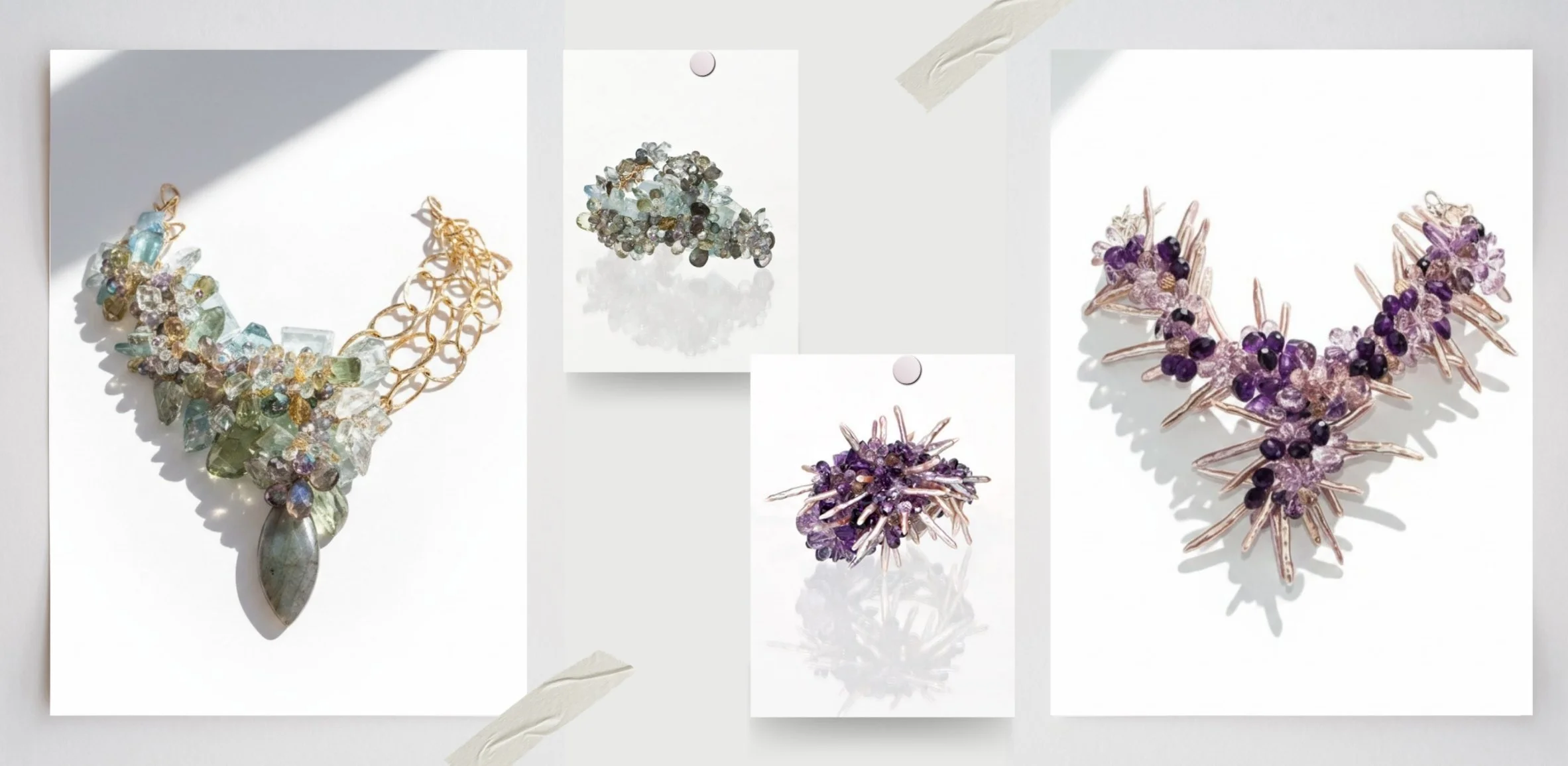
These are some of the pieces that spoke to her on that first studio visit. The set on the left she bought for her friend Leslie and the other set for herself.

As with a true artistic experience, in the wearing, you are transformed in a way no other statement piece can inspire. Andrea Li Designs creations not only reflect who you are - they inspire and instruct as if from ancient patterns. I learned this from a fashion benefit where the designers paired me in an Andrea Li Signature Collection piece, in fire coral and onyx, with a Gino Verlardi black velvet ball gown. Verlardi's classic gown required a classic wearing - using your finishing school grooming and posture, a stature and carriage appropriate for announcement at the Mayflower hotel. But the accompanying Andrea Li Designs piece required even more depth: an original and daring statement. It looked at me as if it was the dragon. In a leap of faith, I let the piece teach me how to wear it and experienced the full the passion and elegance of rare fire coral. You will never feel the same after wearing an Andrea Li Designs. Its gift will stay with you.
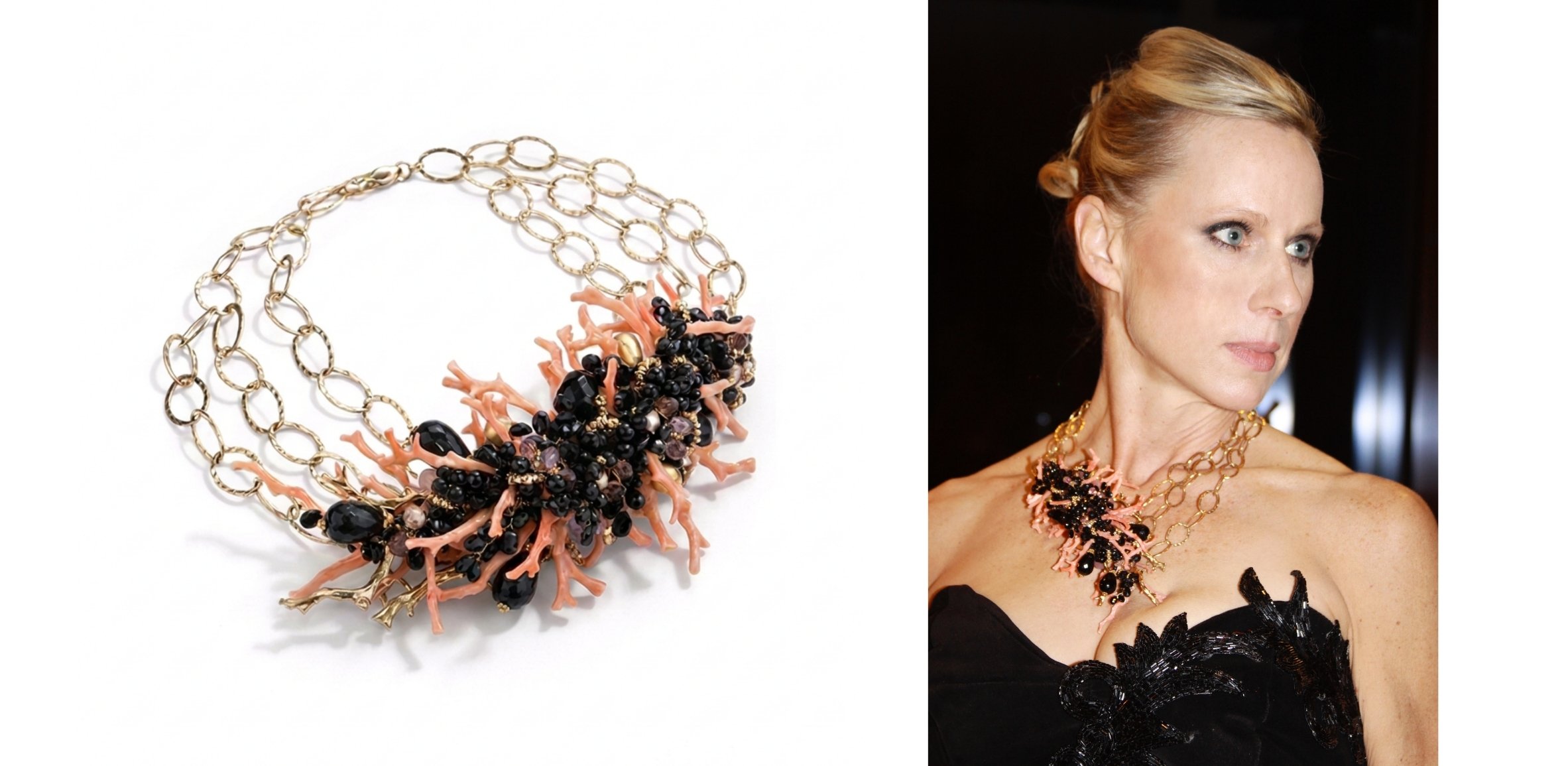
This is the coral necklace I adorned her with to compliment the black Gino Velardi gown

But there was something more I needed from the artist Andrea Li. There was something started with the fire coral that lingered unfinished. I reached out for a commission piece with only an idea, an ephemeral feeling - on the theme of passion and love, that the heart needs to be brave enough to suffer in order experience joy on the other side. For this concept work, the only direction I gave Andrea Li was a 2-CD set of Mozart's Violin Concertos, the color "red" and the statement that "after suffering comes joy". The piece is stunning. She and her companion cuff are simply named Mozart. On every wearing, she draws attention from across the room. A joyous dance of gold and ruby and the unbearable lightness of being.
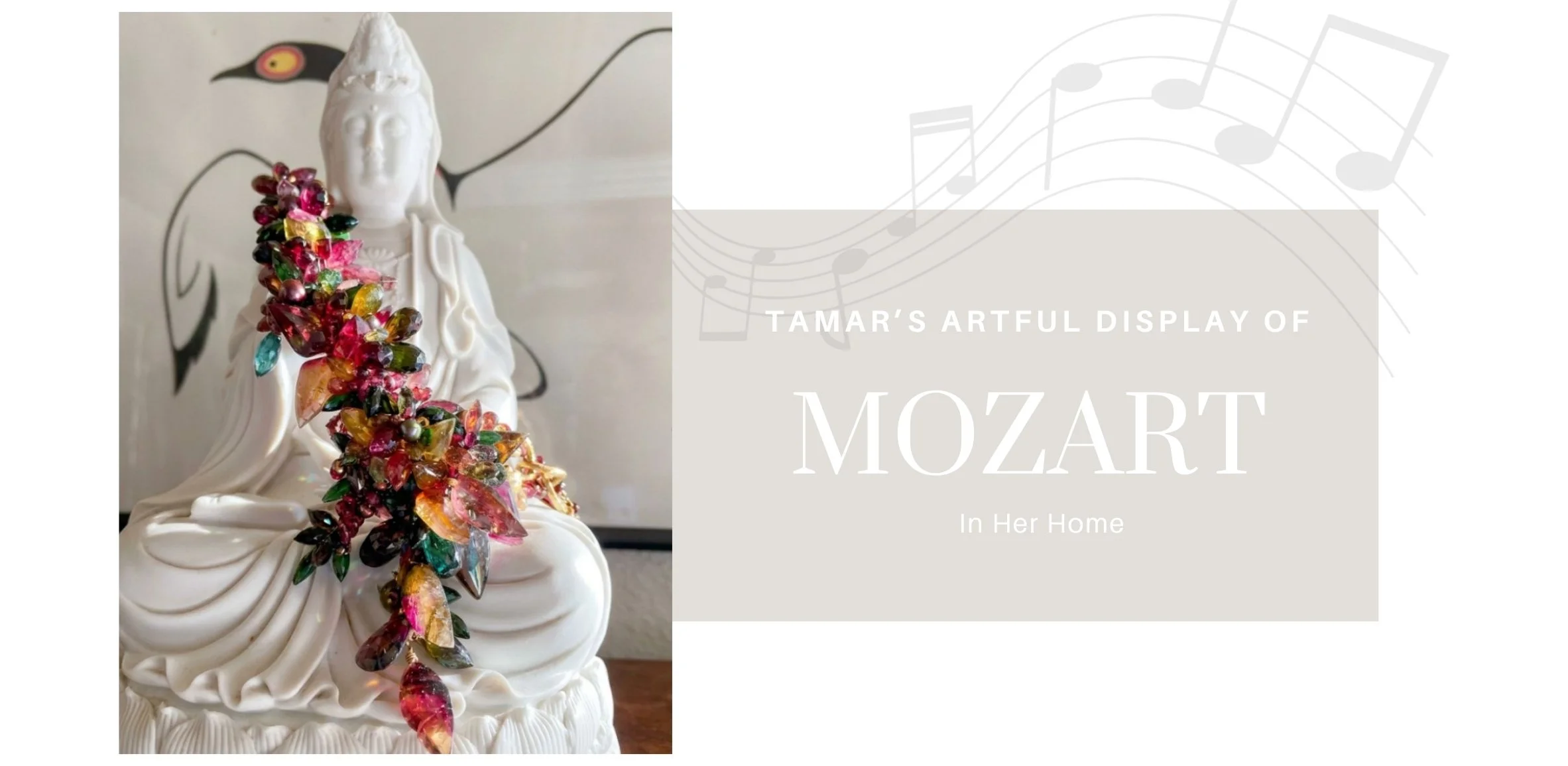
White seated statue draped with a vivid multicolor gemstone necklace, alongside text reading “Tamar’s artful display of Mozart in her home.”

More of her words

Later, Tamar answered a few questions about the work. Again, unaltered.

On what makes it special:

Besides the obvious craftsmanship and artistic design, - Your storytelling - choice of semi-precious - the weave

On how it is different:

Your storytelling - each piece is a world in its own. Every collector's piece has a story, an origin, and an artist behind the work.

On why she bought it:

It chose me. (joking…)

I bought a piece of Andrea Li's artistic vision. I like it in there - part fantasy, part creativity.

On color, and the commission:

I'm a little synesthetic so, I can hear or feel a color. It's not just me - lots of artists are that way. (Key of A major is yellow, Key of C is peridot, ha!)

And the commission piece - I feel red - deeply alive, deeply loving, deeply loved.

And, finally:

what really sold me on the piece was you. The storytelling, the depth woven into each piece, what the stones mean, and how you educated me on the stones and built trust that this was quality cuts of stone, how you hand-picked them out. So for me personally, its buying genuine art.
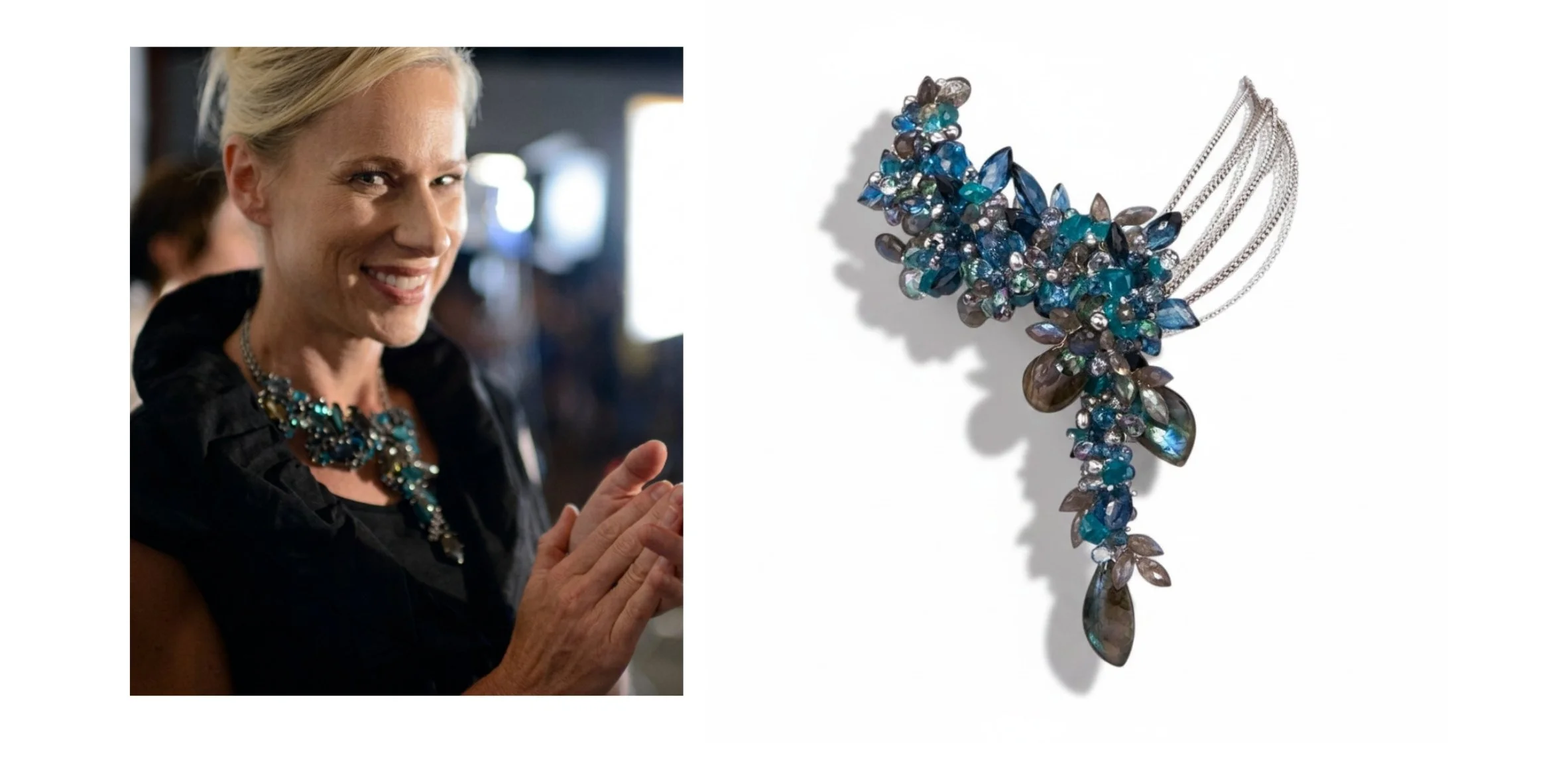
This cherished image was taken at my runway show Beauty Must Suffer wearing one of her favorite pieces she purchased from me.

What her memory set in motion

When I first shared my tribute to Tamar, I thought it would only reach the people who already loved her. But grief travels in ways we cannot plan. Some time after I lost her, one of Tamar's dear friends, Jennifer, found me. She had learned of Tamar's passing from an obituary, and somehow the trail led her to me, and to the collection that carries Tamar's name.

We have been walking through this grief together ever since, and we still are. Not one of us carrying the other, but both of us side by side, two women who loved the same person and needed someone who understood exactly what that kind of loss weighs. The grief is still raw. I am not sure it is meant to be anything else.

To keep Tamar close, Jennifer chose a piece from the collection that carries her name. She carries a little of Tamar with her now.

The night before Jennifer and I last spoke, she dreamed of Tamar. In the dream, she told Tamar that the two of us had found each other, and that she was happy now. When she told me, I could hardly breathe, because that very week I had been walking through an exhibit at the museum and felt Tamar there beside me, the way she always was among beautiful things.

I do not believe any of that is coincidence. I think it is Tamar, still doing what she always did: bringing the right people into the same room, and making sure that no one who loved her has to carry it alone.

She saw the whole of it. The earth and sky, the moss and topaz, the volcanoes and I.M. Pei. She saw the weave, and she gave it its name.

I keep making the work, and now two collections carry hers. Everyone who wears one carries a little of Tamar too. That was always the point of art, she would tell you: to hold what we love in something that outlasts us.

Tamar made me brave enough to believe in myself, but, more importantly, to have the courage to look beyond my identity to see the person my art touches, and ultimately to remove myself from the equation in order to serve that individual alone. My art no longer belongs to me. It is not a vehicle for self-glory; its purpose is to transform the wearer and, hopefully, to manifest the same legacy of lasting impact that Tamar taught me was possible.

Thank you, Tamar.

When Monet Meets the Bench: Reading Sara Mrad's Fleur de Lumière Through Tamar

Tamar CollectionAndrea Li
Collage pairing editorial fashion inspiration, jewelry close-ups, and earrings beneath the title “When Monet Meets the Bench.”

Sara Mrad's Spring 2025 Couture collection, Fleur de Lumière, reaches for the same Impressionist light I was chasing when I made the Tamar collection. Same Monet. Different mediums. Different fabrication languages, couture beadwork, and cold-connection gemstone clusters. This is what I see when I look at her work as a maker.

Photo Credits from Reddit

How I came to the work


A good friend, who is also a client, sent me Sara Mrad's Fleur de Lumière the way most of us encounter couture now: via someone else's tab, late at night, half-distracted. The thing that stopped me wasn't the dress. It was a single close-up where the beading behaved like brushwork—watercolor in glass. Light not so much captured as held still.


That stopped me because it's the same thing I was trying to do with Tamar. Different problem, same solution: make a flower that doesn't pretend to be a flower. Make the quality of looking at a flower, that softness at the edges where color bleeds, the way light dissolves a petal at the right angle. That's Monet's language. Mrad reads it through textile. I was reading it through gemstones.

This was the perfect setup to carry over to a recent shoot, collaborating with talented artists who each brought that same language into their craft to create a cohesive vision to communicate the ethereal nature of Sara’s collection and mine.

Published in Artells Magazine

Fashion & Glamour May Issue, Vol 4062  ·  Print & Digital

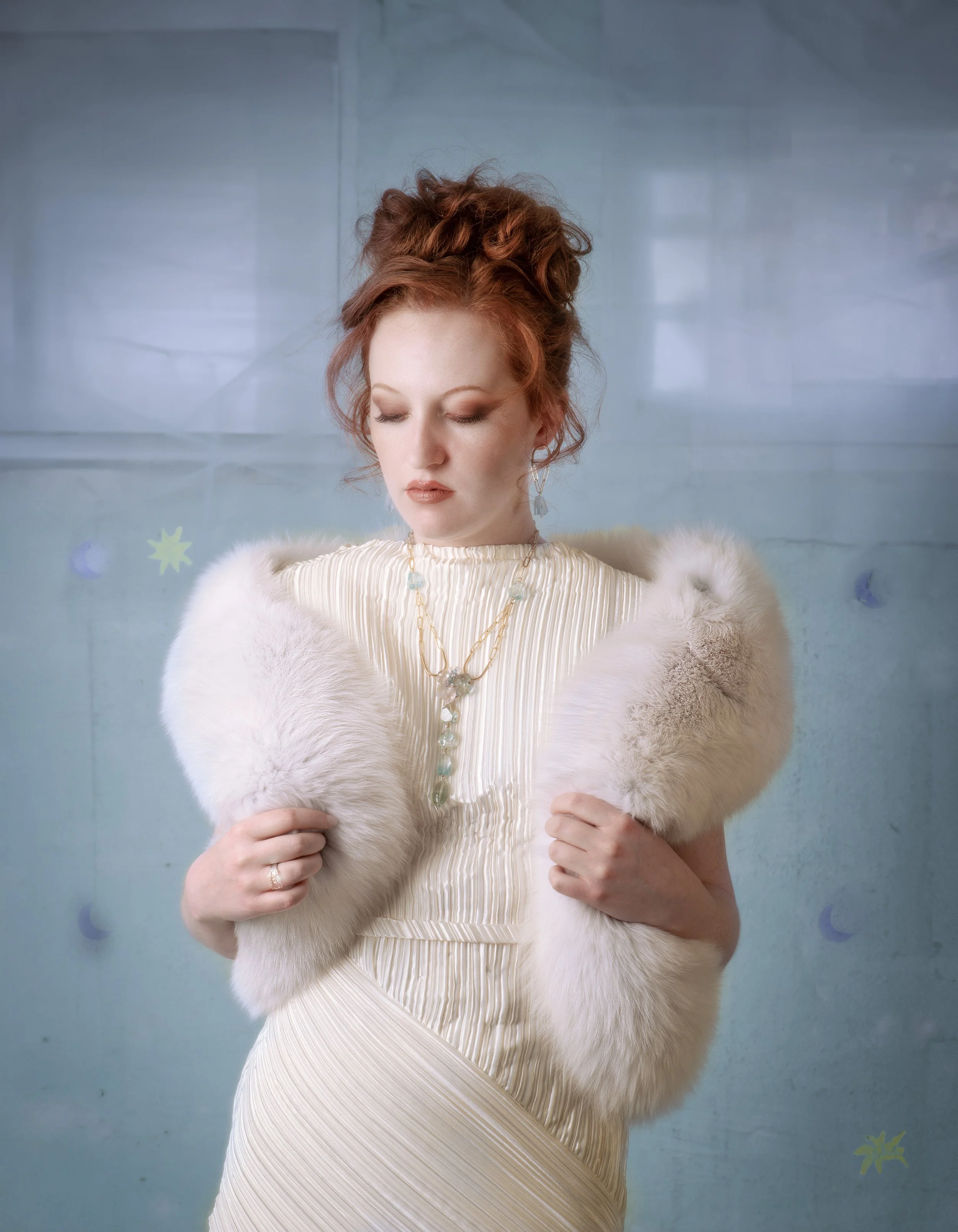
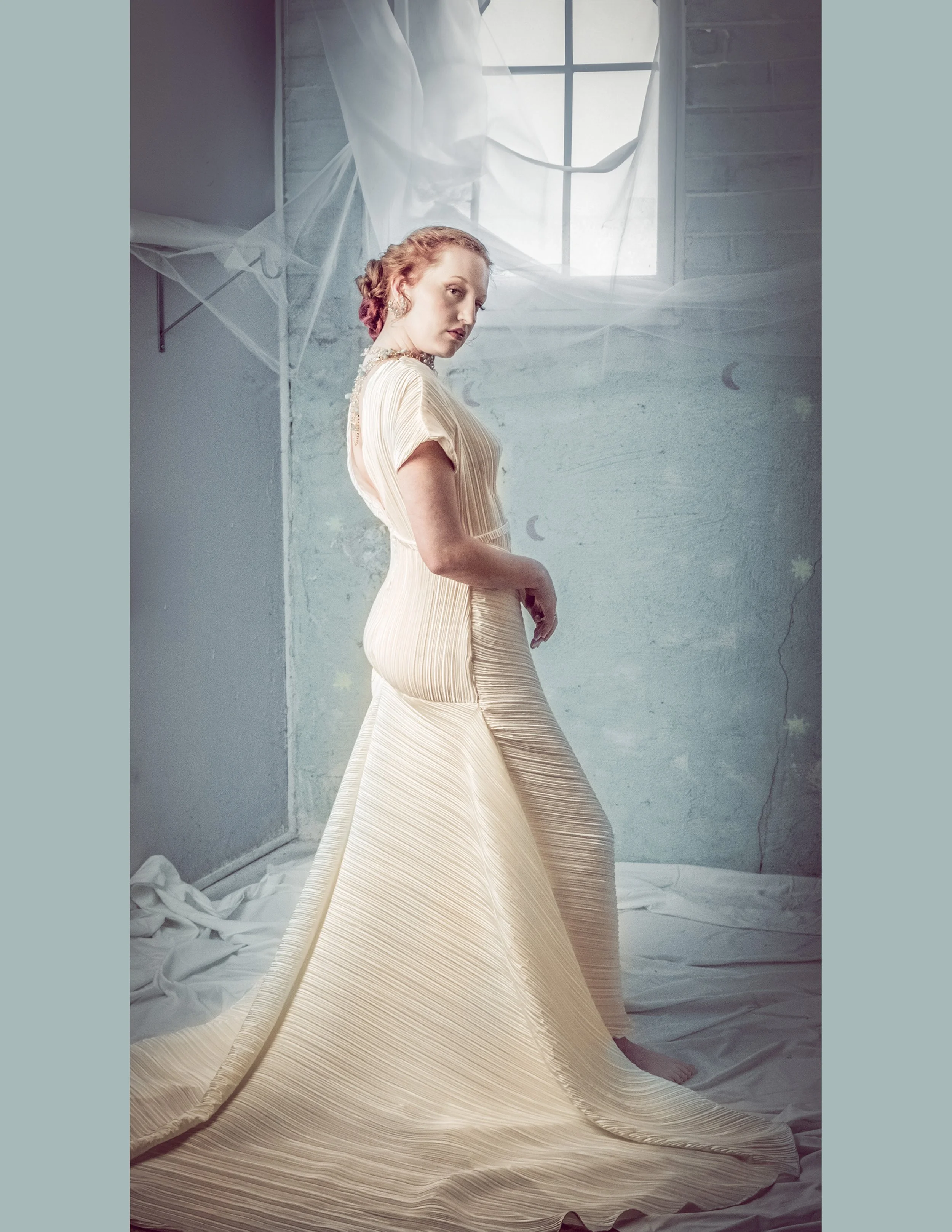
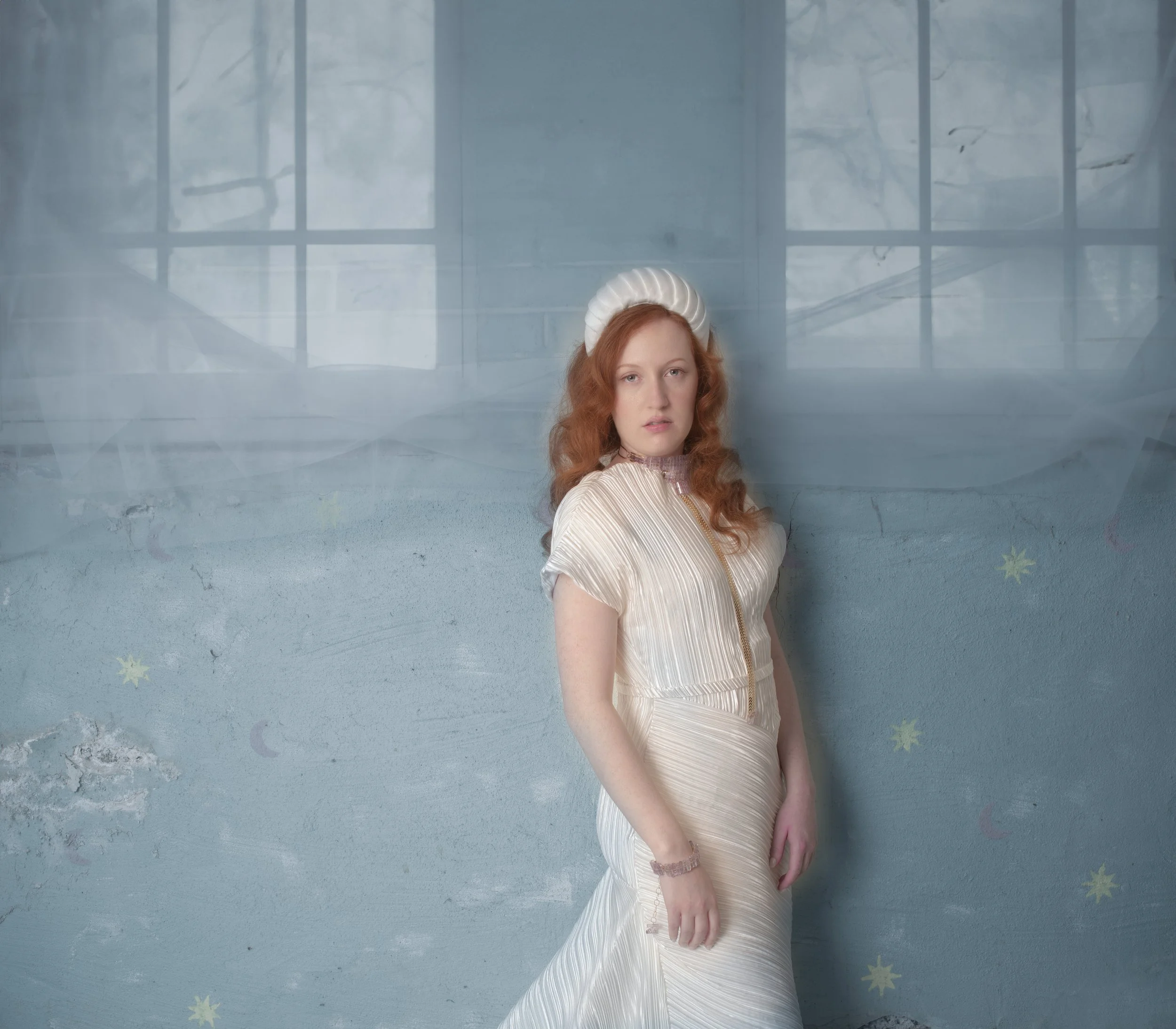
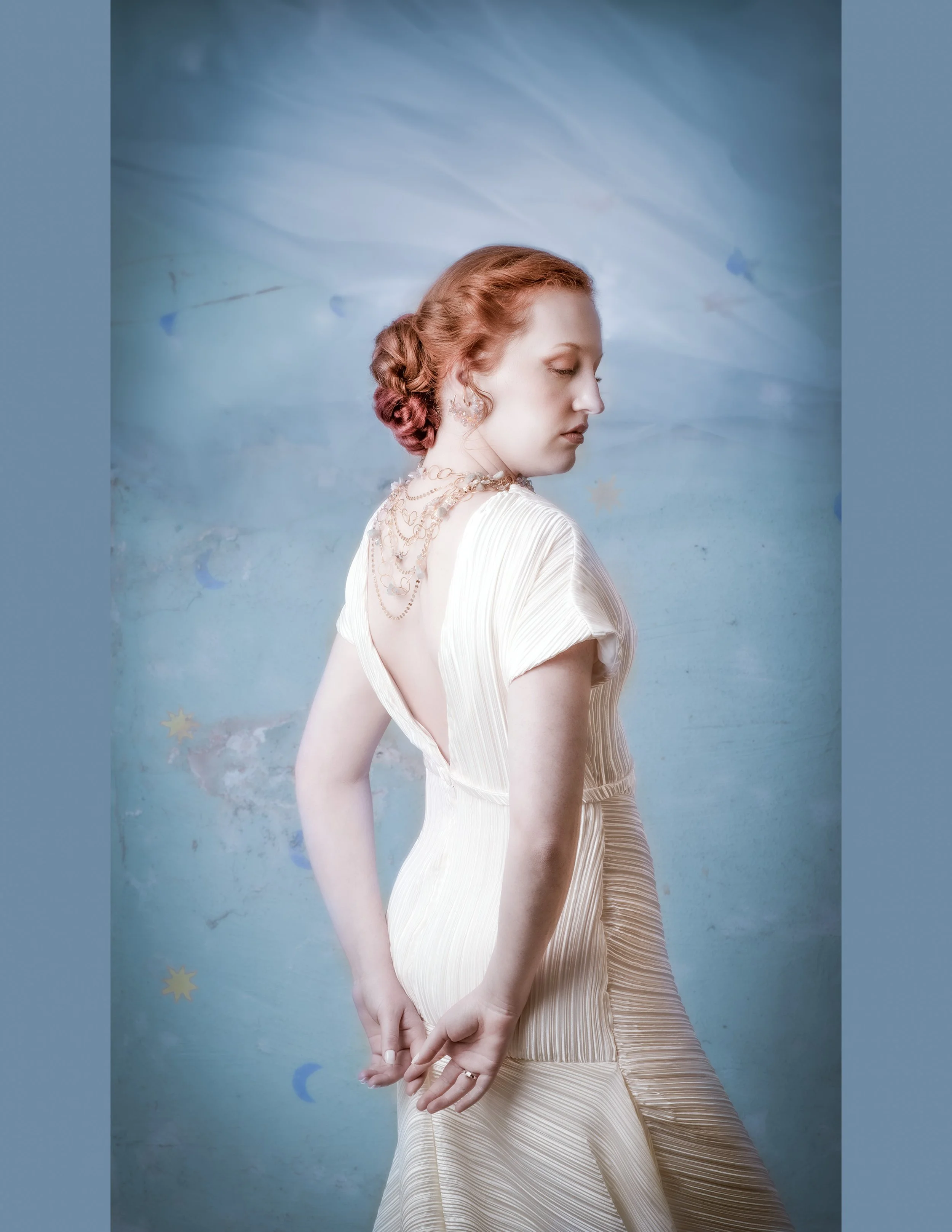
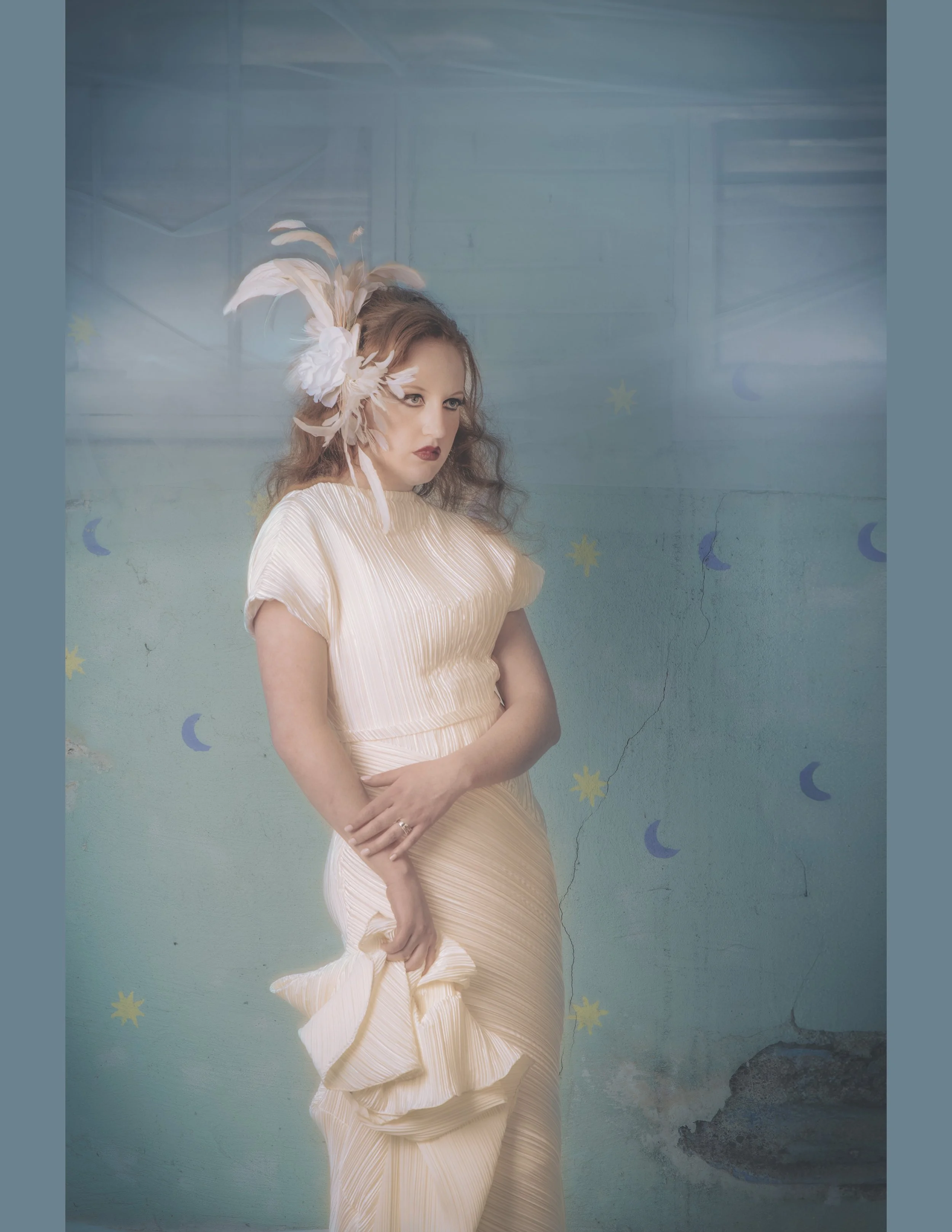
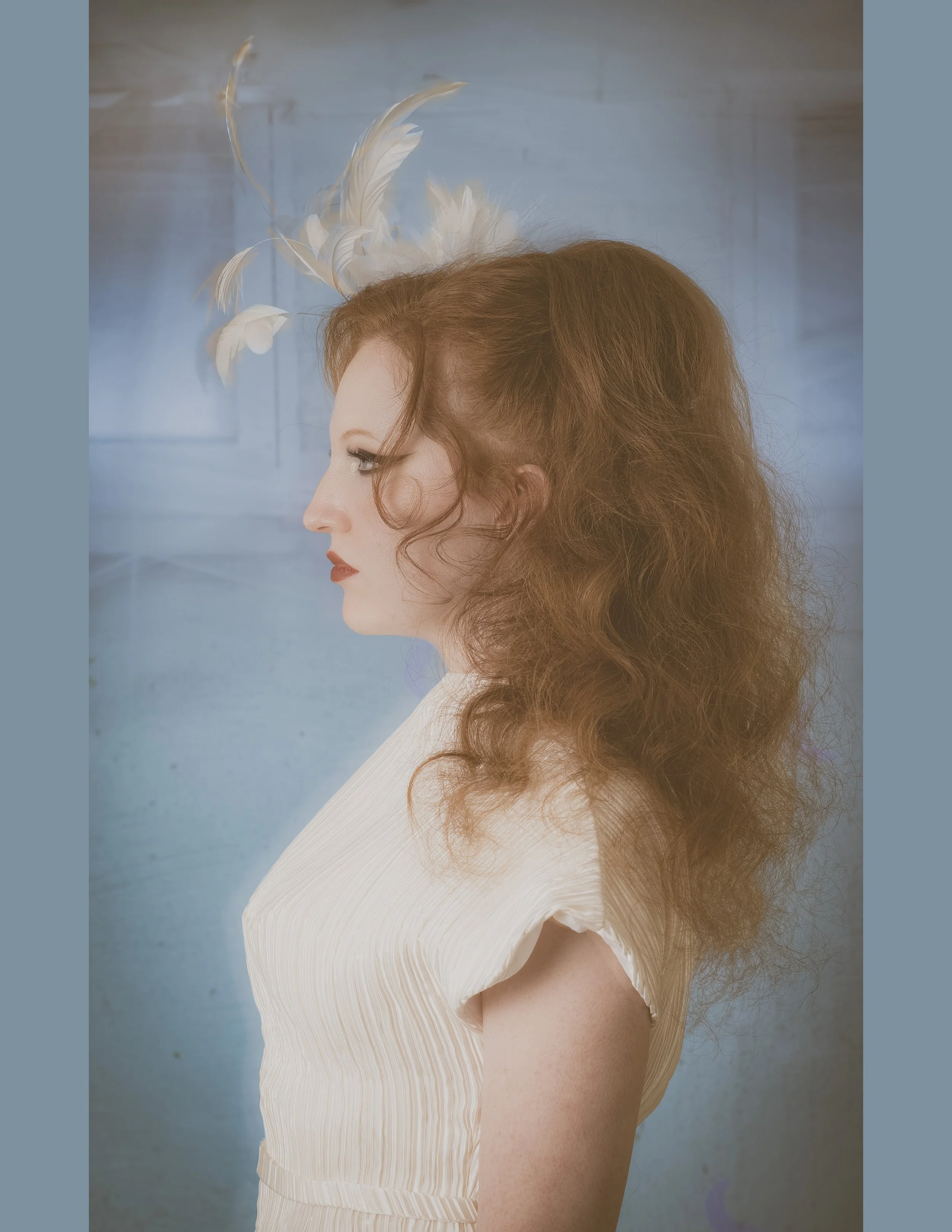
The shoot you see throughout this post became "My Star and Moon," a published editorial in Artells Magazine. What started as a creative conversation between Sara Mrad's Impressionist couture and my Tamar collection found its way into print, styled by Marie Margot Couture, photographed by E J Carr, and directed by Jani Duncan Smith, with Reilly Blake bringing it all to life against a hand-painted celestial backdrop.

Every artist on this team read the same brief and brought their own craft language to it. The pleated gown, the fur, the feathered headpieces, the celestial set, they all speak the same Impressionist softness the Tamar pieces were built to carry. That coherence is not an accident. It is what happens when every maker in the room understands the assignment at the level of material and light, not just mood board.

View "My Star and Moon" in Artells Magazine →
Portrait of a red-haired woman in a white pleated dress and fur stole, wearing delicate layered jewelry against a dreamy pale blue background.

What Fleur de Lumière is


Sara Mrad is a Lebanese designer whose Spring 2025 Couture collection takes Monet's gardens as its source material, the water lilies, the wisteria, the late-Giverny saturation when the painter was nearly blind, and color was doing the work memory couldn't.


What's striking about her interpretation is the discipline. Couture-trained beadwork is by nature additive, bead by bead, one stitch at a time, until the surface becomes the painting. Mrad's restraint, when called for or maximalism to convey aesthetic impact, is what makes it Impressionist rather than just floral. Intention is the point. The eye has to do some of the work.

What Tamar shares with it

When I designed the Tamar collection, I was not thinking about Sara Mrad; I'd never seen her work. But we were drinking from the same well.


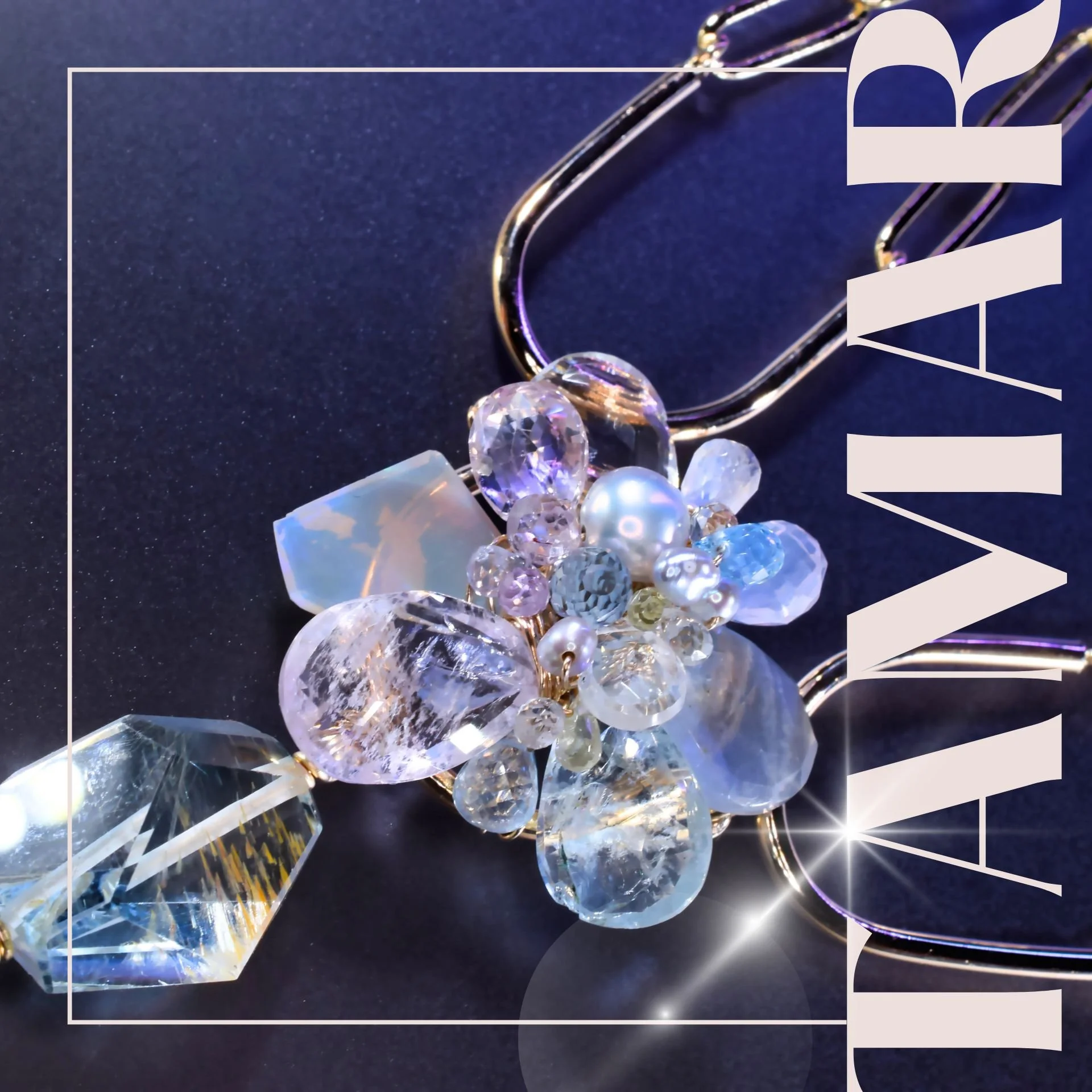
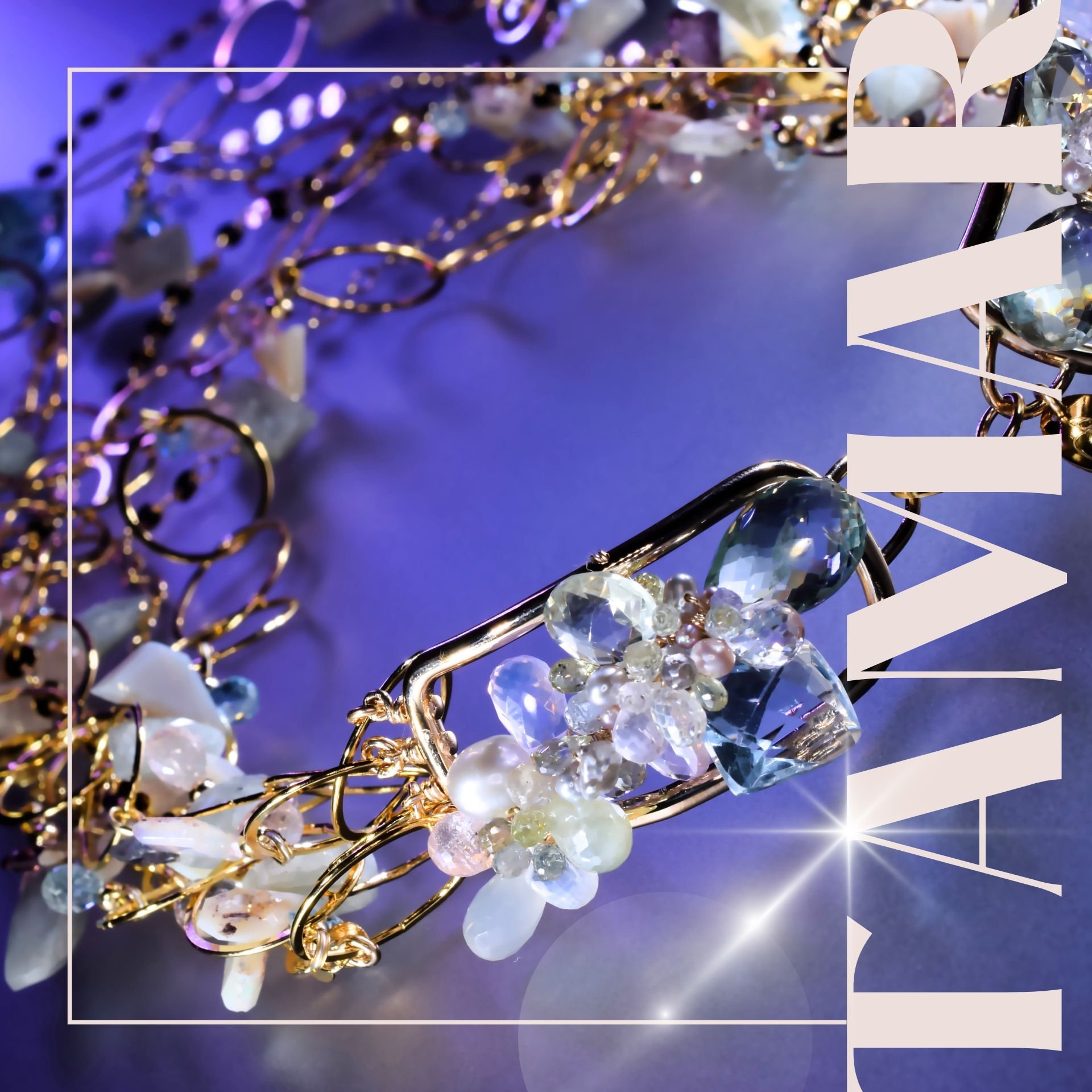
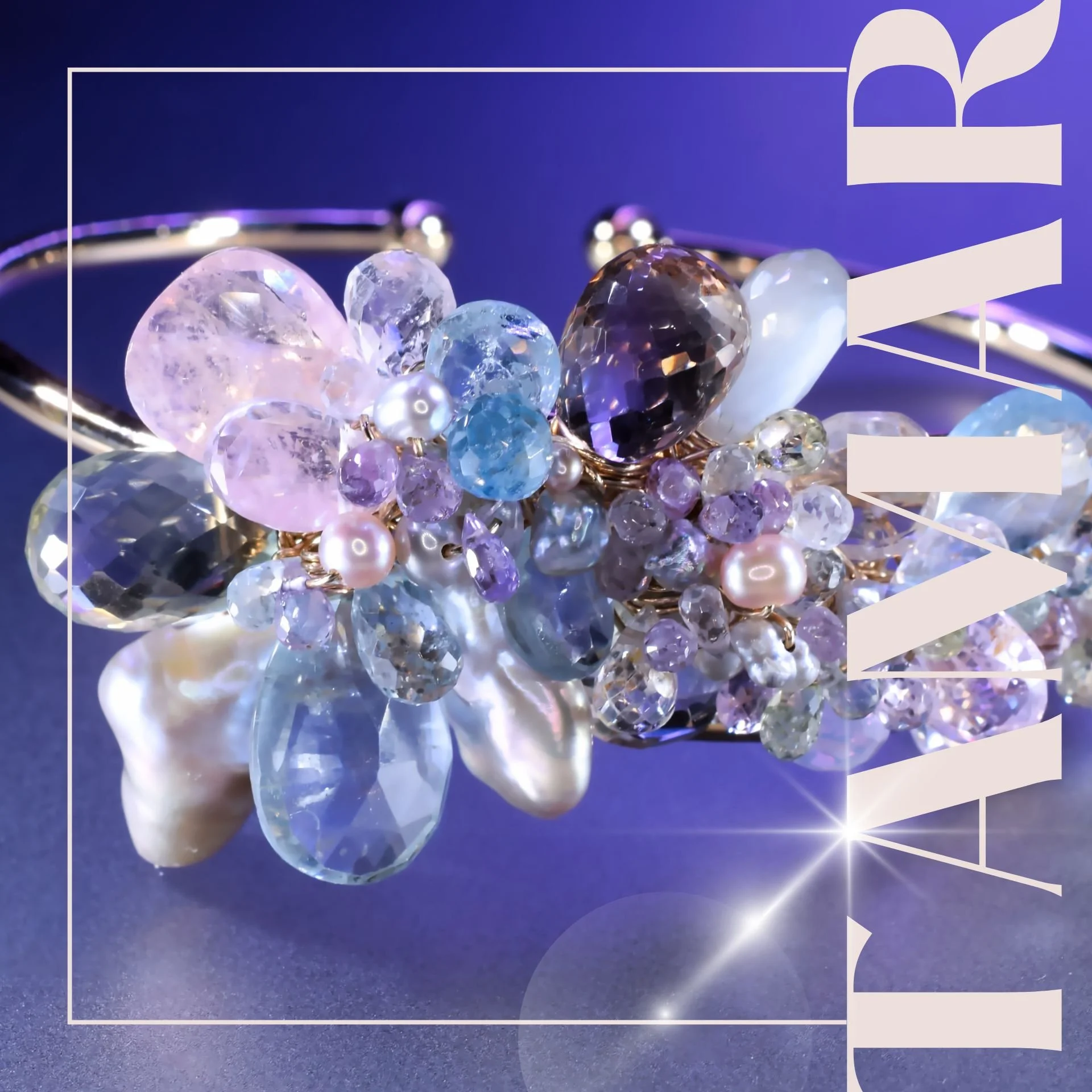
Tamar started with a question: how do you capture the essence of the floral without it reading as jewelry pretending to be a flower? I wanted petals that suggested rather than depicted. Stones that weren't trying to be the bloom but to be the way the bloom looked at dawn — pearled, watercolored, soft at the edge. That meant choosing aquamarine over diamond, moonstone paired with softly colored sapphires, accented by freshwater and Akoya pearls. All three have the quality of being lit from within rather than reflecting light.


When I see Mrad's beading, I recognize that same choice. She isn't trying to make a beaded flower. She's trying to make the look of a flower at a particular hour, in a particular slant of garden light. The beadwork isn't decoration. It's the medium as the brushstroke.


That's the parallel I'd not have spotted from a distance. Up close, it's the same eye.

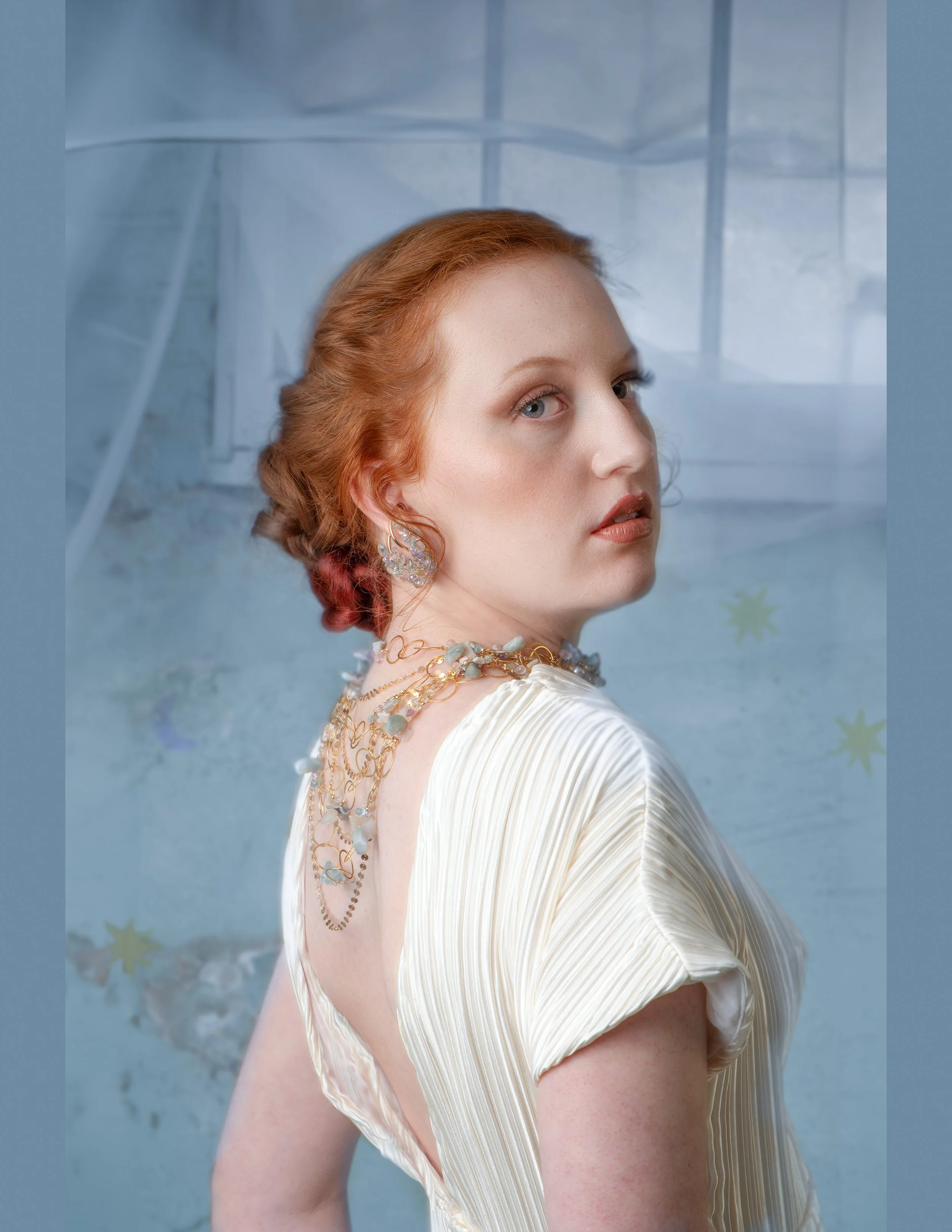
Portrait of a red-haired woman in a white pleated gown, viewed from behind, wearing delicate back-draped jewelry against a soft blue backdrop.

Where the work diverges: cold connection

Here's where the fabrication languages actually diverge and where my training shows.


Couture textile, the kind Mrad does, is inherently additive. You build a surface bead by bead, stitch by stitch, embellishment over embellishment. Heat is rarely the issue; needle and thread are. The craft accumulates.


My Tamar work uses what I call cold connection — not the entire fabrication process, just the gemstone-assembly portion. I build pieces using wire wrapping, hand-baling, and beading using crimps and crimp covers. No heat at any stage when I’m building these intricate gemstone clusters. Heat would damage the stones, and the rest of the construction follows the same logic: every connection is hand-built, mechanical, visible. This is where I employ soldering and bench fabrication. This builds a unique foundation for integrating my gemstone clusters and ensures the entire design is completely novel. When I integrate a commercial chain into a piece, I embed it so deeply through wire wrap and bail work that it becomes unrecognizable as a stock element.


The process: each stone arrives pre-drilled by the lapidary who cut and polished it. Sometimes I have to widen that hole with a diamond-bit drill so the wire I'm wrapping with can pass through cleanly. Then I wrap. One stone, one decision, one knot at a time, building outward into a cluster that has to flow as a piece of design even though it's been assembled bead by bead. Hand-bailing chain, wrapping individual rondelle beads onto a chain to form a gemstone-beaded chain, is the same technique applied to chain construction.


It demands planning many moves ahead. You're committing each stone's placement before you've placed the next twelve. There's no covering up your decisions afterward. Every wrap is visible. Every cluster shows the maker's hand.

Here's what didn't occur to me until I saw Mrad's work: she's doing the same thing. Single bead at a time. Pre-strung, pre-counted, planned ahead, no covering up the decisions. The unit is different (bead vs. gemstone), the medium is different (textile vs. metal+stone), but the fabrication philosophy is identical. Additive. Sequential. Hand-built. No casting, no molding, no shortcuts. The visible maker's hand is the point.


That's the parallel. Not just "Monet inspires both." The structural commitment to assembling a painterly surface one unit at a time, beadwork on couture, gemstone wire-wrap on Tamar, is the same craft language pointed at the same problem.

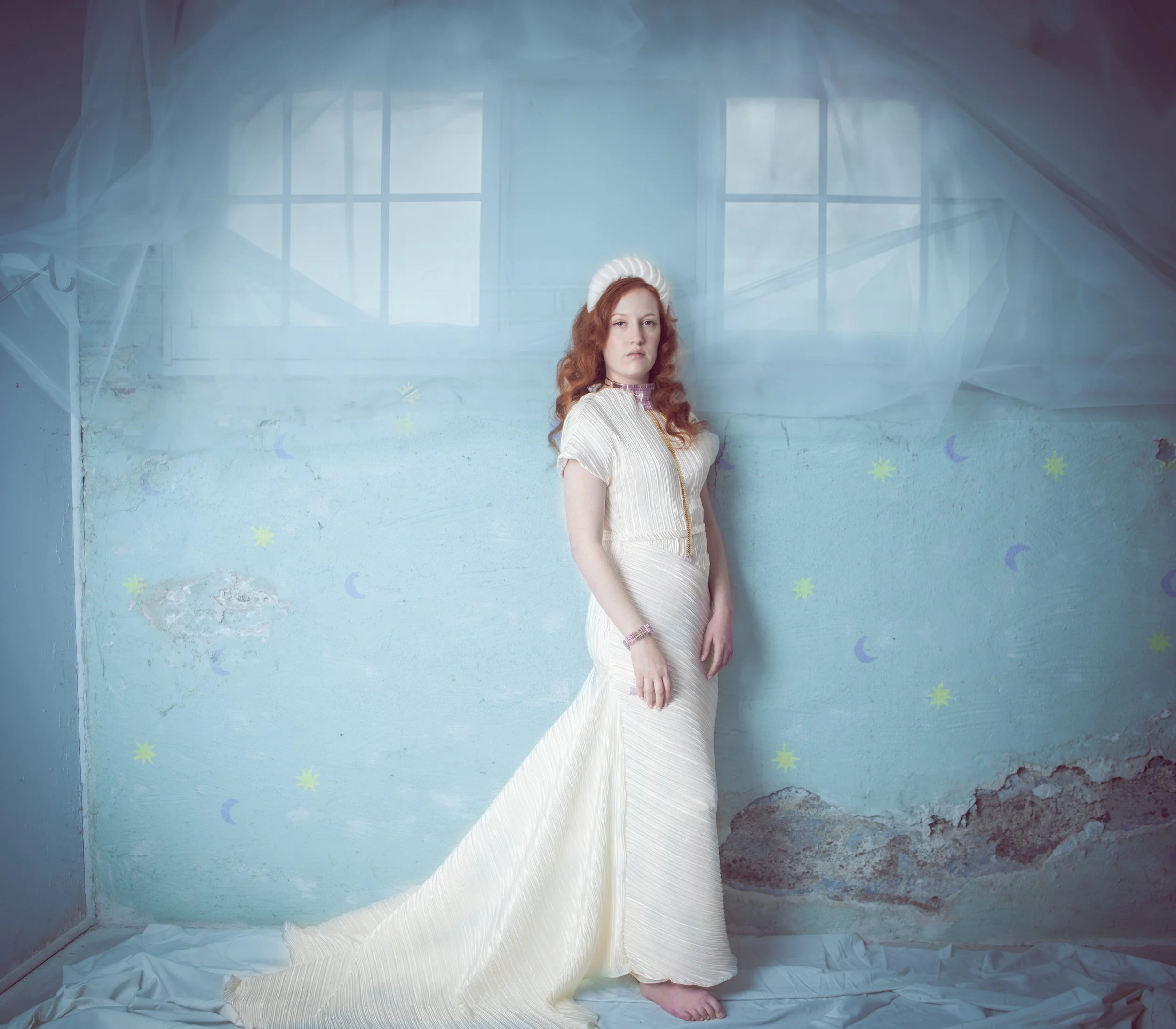
Full-length portrait of a red-haired woman in a flowing white gown, standing barefoot against a dreamy pale blue backdrop with sheer drapery.


What this means for how to wear it

If you're someone who tracks couture, who knows the difference between a Mrad and an Iris van Herpen, between a Schiaparelli embroidery and a Valli gradient, then your jewelry is part of that vocabulary too. It's reading from the same library.


The Tamar collection isn't trying to compete with couture. It's trying to live alongside it. A Tamar piece worn with a watercolor silk dress, an Impressionist-era pearl strand, and soft palette eyeshadow, it reads as one continuous design language. Worn against a sharper, more architectural piece (a Saint Laurent suit, a Mugler corset), it provides a counter-note: softness against structure, Monet against Mondrian.


The point isn't matching. It's literacy. Fine jewelry done well is a paragraph in a longer sentence about how you see the world.

Featured Tamar pieces


Six current Tamar pieces that carry the most of what I'm describing here, and what is featured in my recent shoot.

When you want a piece in this language


If you've read this far and what you actually want is a Tamar-spirited piece made for you, that's the custom shop. Cold-connection cluster work takes time, and one-of-a-kind means I'm not pulling something off a shelf. We start with the stones, what speaks to you, what suits your hand, what sits inside your wardrobe's color story, and build outward, one wire-wrap at a time.


This isn't a bigger or smaller version of an existing piece. It's a piece that's only yours. Different from couture, where Mrad makes one dress and another version is essentially impossible, but rhymes with it. Bench-built, hand-set, made once.


A note on cross-references


I'm going to write more of these. The fashion world has spent a hundred years thinking about how decoration creates meaning, and most of fine jewelry hasn't caught up yet. I want to bring some of that vocabulary back into how we talk about pieces. If you have a designer or a collection you'd like me to read through this lens, send it to me. I'll add it to the queue.

Frequently Asked Questions

Cold connection refers specifically to the gemstone-assembly portion of Andrea's process. Pre-drilled lapidary stones (sometimes widened with a diamond-bit drill) are wire-wrapped, hand-bailed, and secured with crimps and crimp covers into floral, pastel-textured clusters with no heat at the stone-assembly stage. Hand-bailing chain, wrapping individual rondelle beads onto a chain to form a gemstone-beaded chain, uses the same technique. The structural foundation of each piece is built separately using soldering and bench fabrication, creating a novel base for integrating the cold-connection gemstone clusters. When a commercial chain is incorporated, Andrea embeds it so deeply through wire wrap and bail work that it becomes unrecognizable as a stock element. Every connection in the cluster work is hand-built and visible; the maker's hand shows in every wrap.

Both designers draw on Monet's Impressionist palette and the technique of suggesting rather than depicting flowers. Both build painterly surfaces through additive single-unit assembly: Mrad bead by bead in textile and beadwork, Andrea stone by stone in wire-wrapped gemstone clusters. The aesthetic vocabulary, soft-edge color, watercolor light, restraint over depiction, is shared. The fabrication languages couldn't be more different on the surface, but the structural craft commitment is the same.

Yes, through the custom shop. Commissioned pieces are bench-built using cold-connection cluster work (no two are alike) and start with stone selection. Timeline depends on stone availability and design complexity; typical commissions take several weeks from first conversation to finished piece.

Stones lit from within rather than ones that reflect light outward. Aquamarine, moonstone, softly colored sapphires, and freshwater and Akoya pearls all carry that quality. These stones have a luminous, translucent character that reads as painterly rather than architectural. The Tamar lens favors translucence and softness over high-refraction brilliance.

Love What You See? Keep Finding Us.

Google now lets you choose your favorite sources so they show up labeled in AI search answers. If you enjoy discovering handcrafted gemstone jewelry here, add Andrea Li Designs and we'll be easier to find next time you search.

Add Andrea Li Designs as a Preferred Source

One click. Works across Google Search, AI Overviews, and AI Mode.

Credits

Studio Stories: The Pastel Gemstone Ear Cuffs

Tamar CollectionAndrea Li

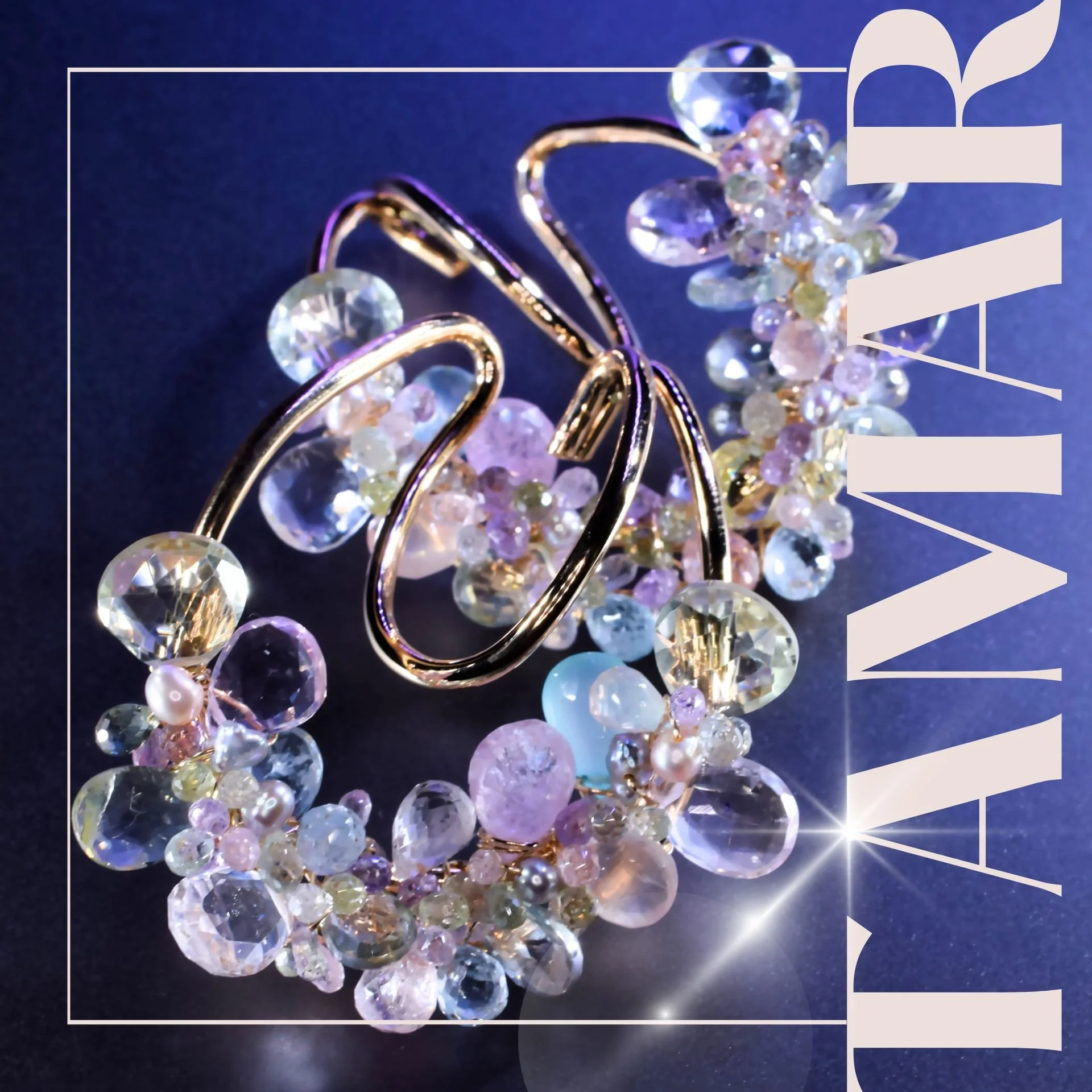
The Pastel Gemstone Ear Cuffs: The Mistake That Made It Better. One cuff came out shorter than the other. Instead of starting over, Andrea Li added wire layers to correct the mismatch, and those layers became the structural frame for a gemstone cluster that the original single-wire design could never have supported. No piercing required. No conformity required.

Studio Stories: The Blue Gemstone Drop Choker

Tamar CollectionAndrea Li

The Blue Gemstone Drop Choker: The Devil in the Details. This choker looks simple. It nearly broke me. Shaping heavy-gauge wire to the human neck (which is not a circle), aligning a suspended blue topaz inside a caged U-shape, and orienting every stone flat-side back for comfort, the invisible engineering behind this piece makes its elegance possible.

The Pink Kunzite Choker: A Wearable Rebellion

Tamar CollectionAndrea Li

The Pink Kunzite Choker: A Wearable Rebellion

This sculptural choker pushed me beyond my technical limits and wasn't designed to sell; it was created for the soul. Born from pure artistic instinct and advanced soldering techniques I had to master in real-time, this piece represents what's possible when you stop asking "will this sell?" and start creating without compromise.